
Part of the 3D Printing Channel NetworkDesign • Print • Verify • Reward
AI Factory

AI is becoming the brain of additive manufacturing.

Explore how intelligent design, process optimization, computer vision, robotics and blockchain can combine—without pretending automation removes engineering responsibility.

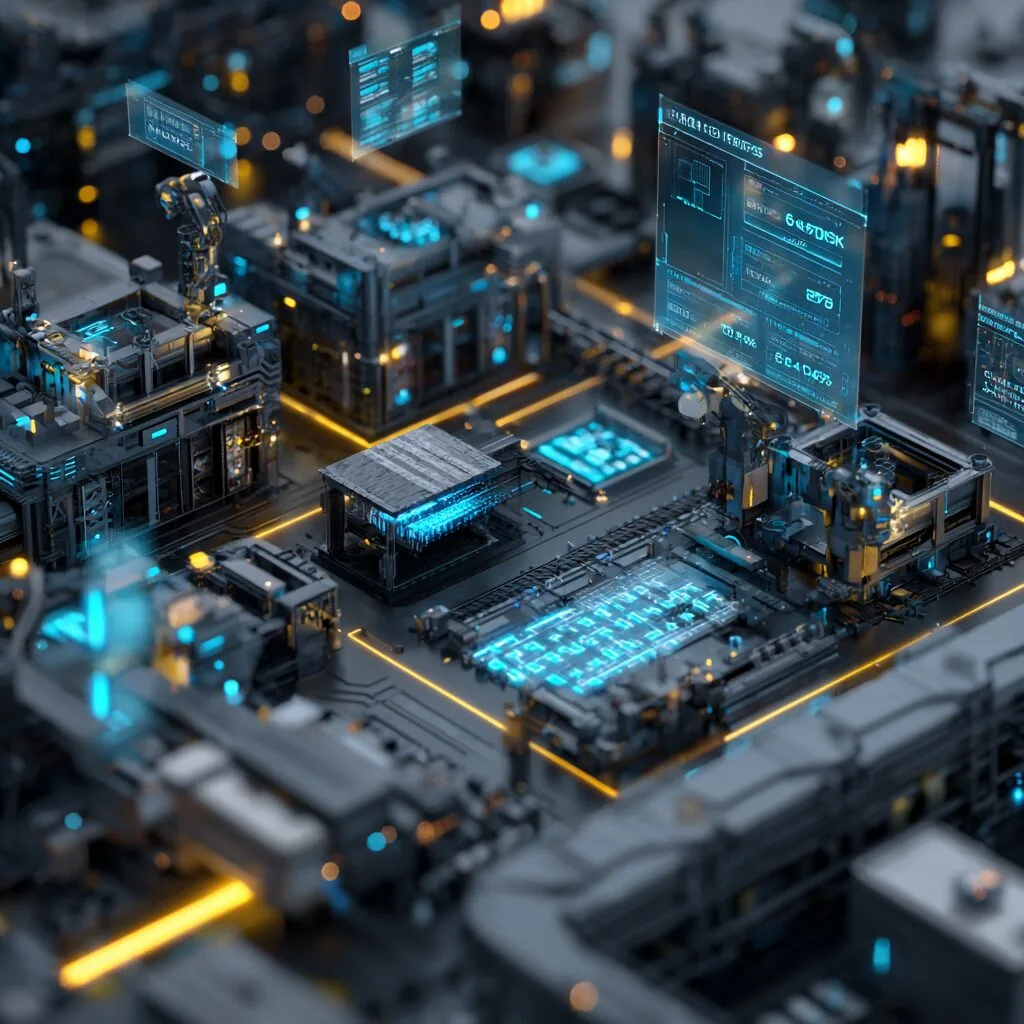
AI smart factory with digital manufacturing systems
The convergence stack

Design, decide, produce, verify and improve.

AI can generate candidate geometries, predict process outcomes, detect anomalies, schedule printers and help route work. Robotics can load materials, move parts and perform post-processing. Additive manufacturing converts digital instructions into physical objects. Tokenization can add identity, permission and settlement.

The advantage comes from integration. A disconnected AI model or isolated printer is only a tool; a governed workflow with feedback can become an adaptive production system.

Explore Alphire AI ↗
Five intelligent layers

The AI-additive workflow

1

Generate

AI-assisted ideation, computational design and topology exploration.

2

Simulate

Estimate loads, distortion, supports, thermal behavior and material use.

3

Optimize

Select orientation, parameters, scheduling and production routes.

4

Observe

Use sensors and vision to flag anomalies and collect evidence.

5

Learn

Feed validated outcomes into future design and process decisions.

Opportunity finder

Find your AI + 3D printing path

Select your strongest skill, goal and starting budget for an illustrative project direction.

Content + Community Builder

Start with tutorials, reviews and community challenges, then connect creators to the network.

Risk

Hallucinated geometry

AI-generated concepts can look plausible while violating loads, tolerances, manufacturing rules or safety requirements.

Risk

Biased training data

Optimization reflects the data, objectives and constraints supplied. Missing failure cases can create false confidence.

Risk

Cyber-physical attacks

Connected printers, toolpaths, models and build records create new security surfaces requiring access controls and monitoring.

Responsible-use rule: AI recommendations should be validated by qualified humans, appropriate simulation, testing, standards and regulatory processes for the application.